
The Illuminati
The Illuminati is a name that has been used for several groups, both real and fictional. The word comes from the Latin illuminatus, meaning “enlightened.”
Historically, the name is most closely associated with the Bavarian Illuminati, a secret society founded on May 1, 1776, in Bavaria during the Age of Enlightenment.
The group said its main goals were to fight superstition, promote reason and knowledge, reduce excessive religious influence over public life, and oppose the abuse of government power by monarchs. In its rules, the group stated that its purpose was to stop people who used injustice for their own benefit and to keep them under control without becoming rulers themselves.
In 1784, the Bavarian government banned the Illuminati. Similar orders were issued in 1785, 1787, and 1790, and other secret societies, including Freemasonry, were also targeted. The bans were supported by the Catholic Church.
After the group was banned, critics—especially conservative and religious writers—claimed that the Illuminati had continued to operate secretly. Some even accused the group of being involved in major historical events, including the French Revolution. However, there is no reliable evidence that the original Illuminati continued to exist after its suppression or that it organized the French Revolution.
The Bavarian Illuminati attracted several well-known intellectuals and writers of its time, including Johann Wolfgang von Goethe and Johann Gottfried Herder, as well as members of European nobility.
The Illuminati in Modern Conspiracy Theories
Over time, the word “Illuminati” began to be used for groups that are claimed to be connected to or descended from the original Bavarian Illuminati. However, these alleged connections have not been proven.
Modern conspiracy theories often claim that the Illuminati secretly controls governments, major companies, financial institutions, and other powerful organizations. Some theories say that the group secretly influences world events, places agents in positions of power, and works toward creating what is often called a “New World Order.”
In these theories, the Illuminati are portrayed as a hidden organization working behind the scenes and controlling important events without the public knowing.
There is no established historical evidence proving that a modern organization with this worldwide level of control is a continuation of the original Bavarian Illuminati.
The idea of the Illuminati has also become a major part of popular culture. It has appeared in books, movies, television shows, comics, video games, and music videos, where the Illuminati are often portrayed as a mysterious and powerful secret organization.
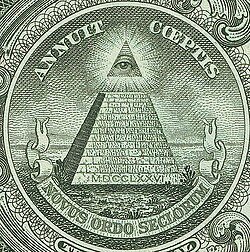
The Eye of Providence, as seen on the US $1 bill, has been perceived by some to be evidence of a conspiracy linking the Founding Fathers of the United States to the Illuminati
The Illuminati History Origin
Adam Weishaupt and the Founding of the Illuminati
Adam Weishaupt (1748–1830) was a German professor who became a professor of Canon Law and practical philosophy at the University of Ingolstadt in 1773.
What does illuminati mean He was the only professor at the university who was not a member of the clergy. At the time, the university had strong connections with the Jesuits. Although Pope Clement XIV had officially dissolved the Jesuit order in 1773, the Jesuits in Ingolstadt still had financial influence and some control over the university.
They often tried to challenge or discredit professors who were not members of the clergy, especially when those professors taught ideas they considered too liberal or influenced by Protestant thinking.
Because of these experiences, Weishaupt became strongly anti-clerical. He wanted to promote the ideas of the Enlightenment, which emphasized reason, education, freedom of thought, and opposition to superstition. He believed that a secret organization of people with similar ideas could help spread these principles.
Founding the Society
Weishaupt considered joining Freemasonry, but he found it expensive and believed that it did not fully support the ideas he wanted to promote.
Instead, he decided to create his own organization. He designed it with different ranks and levels, partly inspired by the structure of Freemasonry, but with his own goals.
At first, he called the organization Bund der Perfektibilisten, which can be translated as the Covenant of Perfectibility or Perfectibilists. He later changed the name because he thought it sounded unusual.
On May 1, 1776, Weishaupt and four students formally created the group. They chose the Owl of Minerva, a symbol associated with wisdom and knowledge, as their symbol.
Members used secret names inside the organization. Weishaupt used the name “Spartacus.” The four students used the names Ajax, Agathon, Tiberius, and Erasmus Roterodamus.
Weishaupt later expelled one of the members, Sutor, because he considered him lazy and inactive.
In April 1778, the organization was renamed the Illuminatenorden, or Order of the Illuminati. Before choosing this name, Weishaupt had also seriously considered calling it the “Bee Order.”
Early Growth of the Illuminati
One of the most active early members was Massenhausen. Soon after the organization was founded, he was studying in Munich and recruited Xavier von Zwack, who had previously been a student of Weishaupt.
Zwack later became an important administrator and held a position connected with the Bavarian National Lottery.
At first, Massenhausen played an important role in expanding the organization. However, his enthusiasm eventually became a problem for Weishaupt. He sometimes tried to recruit people whom Weishaupt considered unsuitable.
Massenhausen’s personal life also began to interfere with his work for the organization. Weishaupt eventually transferred control of the Munich group to Zwack.
It later became clear that Massenhausen had misused membership payments and had intercepted correspondence between Weishaupt and Zwack.
In 1778, Massenhausen graduated and left Bavaria for a new position. He no longer showed much interest in the organization.
At this point, the Illuminati had only about 12 members.
Expansion of the Order
After Massenhausen left, Zwack focused on recruiting older and more influential people.
One of Weishaupt’s most valued recruits was Hertel, a childhood friend who was also a canon at the Munich Frauenkirche.
By the end of the summer of 1778, the organization had grown to about 27 members. These members were organized into five groups located in:
- Munich, known within the order as Athens
- Ingolstadt, known as Eleusis
- Ravensburg, known as Sparta
- Freising, known as Thebes
- Eichstätt
Ranks and Membership
During its early years, the Illuminati had three main levels:
- Novice
- Minerval
- Illuminated Minerval
The Minerval level included a more complicated initiation ceremony. New members were given secret signs and passwords.
Weishaupt also created a system through which members secretly reported on one another. This allowed him to learn about the activities, behavior, and character of members.
Some of his most trusted members eventually became part of the organization’s ruling council, known as the Areopagus.
Certain Novices were allowed to recruit new members. These recruiters were known as Insinuants.
The organization actively looked for Christians who were considered respectable and trustworthy. However, its early membership rules specifically excluded Jews, pagans, women, monks, and members of other secret societies.
The preferred candidates were generally wealthy, obedient, interested in learning, and between 18 and 30 years old.
Weishaupt and Freemasonry
Weishaupt eventually became interested in Freemasonry because he wanted to learn more about its rituals and organizational structure.
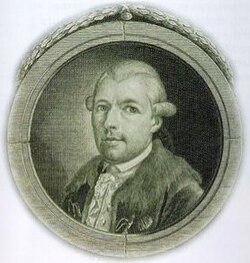
He had previously tried to discourage some members of his own group from joining the Freemasons. However, he later decided that joining Freemasonry could give him access to information that might help him develop the Illuminati.
In February 1777, Weishaupt joined a Masonic lodge called “Prudence,” which belonged to the Rite of Strict Observance.
He progressed through the first three degrees of Freemasonry, sometimes called the “blue lodge” degrees. However, these degrees did not give him access to the higher-level knowledge and rituals he was looking for.
The following year, a priest named Abbé Marotti told Zwack that the deeper secrets of Freemasonry were supposedly connected to knowledge of an older religion and the early Christian church.
Zwack then persuaded Weishaupt that the Illuminati should develop friendly relations with Freemasonry. They also considered obtaining permission to establish their own Masonic lodge.
By December 1778, incorporating the first three degrees of Freemasonry into their organization had become a secondary project for the Illuminati.
The Theodore Lodge
The Illuminati eventually obtained a charter from the Grand Lodge of Prussia, known as the Royal York for Friendship.
They established a new Masonic lodge in Munich called “Theodore of the Good Council.” The name was chosen partly to appeal to Charles Theodore, Elector of Bavaria.
The lodge was officially founded on March 21, 1779, and many Illuminati members quickly joined it.
Its first master was a man named Radl. He was eventually persuaded to return to his home in Baden, after which Weishaupt’s organization took control of the lodge.
Becoming Independent
The next goal was to make the lodge independent from its original Grand Lodge.
The Illuminati established Masonic connections with the Union Lodge in Frankfurt, which was associated with the Premier Grand Lodge of England.
Through these connections, the Theodore lodge gained independent recognition and was able to operate on its own.
As a recognized mother lodge, it could also establish new lodges.
The Illuminati then began recruiting more members among Freemasons in Frankfurt. During this recruitment effort, they gained the support of Adolph Freiherr Knigge, who would later become one of the most important figures in the development and expansion of the Illuminati.
illuminati is real Adolph Knigge
Adolph Knigge Joins the Illuminati
Adolph Knigge Joins the Illuminati
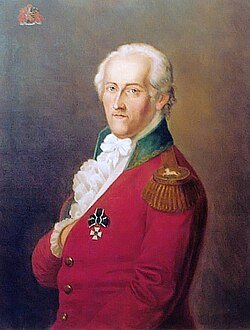
Adolph Freiherr Knigge was recruited into the Illuminati in late 1780 during a meeting of the Rite of Strict Observance. He was introduced to the organization by Costanzo Marchese di Costanzo, an infantry captain in the Bavarian army and a fellow Freemason.
Knigge was still in his twenties, but he had already reached the highest initiation levels of his Masonic order. He had also developed his own plans for reforming Freemasonry. When his ideas received little support, he became interested after Costanzo told him that an organization similar to the one Knigge wanted to create already existed.
Knigge and three of his friends wanted to learn more about the group. Costanzo showed them material connected to the Minerval level of the Illuminati. The material contained liberal writings that were banned in Bavaria but were commonly available in the Protestant German states.
Knigge’s three companions soon lost interest, but Knigge continued investigating the organization. His persistence eventually led to a letter from Adam Weishaupt in November 1780.
Knigge’s connections inside and outside Freemasonry made him an important potential recruit. He was also attracted to the Illuminati’s stated goals of education and protecting people from despotism.
Weishaupt also showed support for Knigge’s interest in alchemy and what were then called the “higher sciences.” Knigge responded by explaining his own plans for reforming Freemasonry, especially as the Rite of Strict Observance was beginning to question its own origins.
Knigge’s Role in Recruitment
Before Knigge could enter the higher levels of the Illuminati, Weishaupt gave him the task of recruiting new members.
Knigge agreed, but he wanted to choose where and how he would recruit people. Many Freemasons found his description of the new Masonic organization attractive and joined the Minerval level of the Illuminati.
At this time, Knigge believed that the organization had mysterious and powerful superiors, whom Weishaupt claimed to serve. However, Knigge struggled to answer questions about the higher levels because he did not actually have information about them.
Weishaupt delayed giving him more information and instead gave him another assignment. Using material supplied by Weishaupt, Knigge prepared pamphlets about the outlawed Jesuits. These pamphlets claimed that the Jesuits had continued to operate and recruit members, particularly in Bavaria.
Eventually, Knigge became frustrated because he could not give his recruits satisfactory answers about the higher degrees. He wrote to Weishaupt explaining the problem.
In January 1781, Weishaupt finally admitted the truth: the supposed ancient history of the order and its mysterious superiors were inventions, and the higher degrees had not yet been written.
Rather than leaving, Knigge accepted the situation. Weishaupt gave him permission to help create the higher degrees and promised to provide his own notes.
Knigge saw this as an opportunity to use the Illuminati to promote some of his own ideas. He believed his approach could make the organization more attractive to potential members in the Protestant states of Germany.
In November 1781, the Areopagus gave Knigge 50 florins to travel through Bavaria. During the journey, he passed through Swabia and Franconia and met other Illuminati members who welcomed him.
Internal Problems
By this time, serious disagreements had developed inside the Illuminati.
In July 1780, the group in Eichstätt had created its own independent province. At the same time, tensions were growing between Weishaupt and the Areopagus, the organization’s ruling council.
Members of the Areopagus considered Weishaupt stubborn, dictatorial, and inconsistent. Knigge became an important mediator between the two sides.
During discussions with Weishaupt and the Areopagus, Knigge identified two major problems.
First, Weishaupt placed a strong emphasis on recruiting university students. As a result, some important positions within the organization were held by young people who had little practical experience.
Second, the organization’s original opposition to the Jesuits had gradually developed into a broader anti-religious attitude. Knigge believed this would make it difficult to attract experienced Freemasons.
Knigge understood why the liberal members of the Illuminati had developed strong anti-religious feelings, particularly because of the influence of conservative Catholicism in Bavaria. However, he also believed that openly anti-religious ideas could damage the organization’s reputation in Protestant areas and make further expansion more difficult.
Weishaupt and the Areopagus eventually gave Knigge considerable freedom to develop the organization.
Knigge had useful contacts inside and outside Freemasonry. He also had experience creating rituals and organizational structures. The Illuminati had previously stopped at the level called Illuminatus Minor, with only the Minerval level below it and rough ideas for the higher degrees.
Knigge was therefore given the opportunity to develop a more complete system of degrees. The main restrictions were that the most secret teachings of the highest levels had to be discussed carefully and that his proposed degrees had to receive approval.
Problems with Lodge Theodore
The plan to establish the Illuminati as a legitimate branch of Freemasonry had also encountered difficulties.
Although the Illuminati controlled Lodge Theodore, a separate chapter of “Elect Masters” connected to the lodge had only one Illuminati member. The chapter also had authority over the lodge.
This created an obstacle to the Illuminati’s plan to turn Lodge Theodore into the first central lodge of a new form of Illuminated Freemasonry.
The Illuminati and the chapter eventually signed an agreement. By the end of January 1781, four daughter lodges had been established. However, the chapter was still not willing to give up its independence.
Costanzo’s Journey to Prussia
Costanzo also became involved in a dispute with the Royal York organization.
He complained that the fees being paid to the new Grand Lodge were not matched by the services being provided.
The Royal York did not want to lose the income, so it offered to provide the higher Masonic secrets to a representative sent from Munich.
Costanzo traveled to Prussia on April 4, 1780, with instructions to negotiate lower fees for Lodge Theodore.
However, during his journey, Costanzo became involved in an argument with a Frenchman over a woman who was traveling in the same carriage.
The Frenchman sent a message to the king accusing Costanzo of being a spy. Costanzo was eventually released from prison with help from the Grand Master of Royal York, but he was expelled from Prussia without achieving his mission.
The New System of the Illuminati
Knigge originally planned to obtain a formal constitution from London. However, the Illuminati realized that the existing Masonic chapter would probably discover their plans.
Until they could take control of other Masonic lodges that were outside the chapter’s control, they decided to focus on rewriting the three Masonic degrees used by the lodges they already controlled.
On January 20, 1782, Knigge presented his new system of degrees for the Illuminati.
The system was divided into three main classes:
Class I – The Beginning
This class included:
- Novice
- Minerval
- Illuminatus Minor
Class II – Masonic Degrees
This class included the traditional three “blue lodge” degrees:
- Apprentice
- Companion
- Master
These were followed by two higher degrees:
- Scottish Novice
- Scottish Knight
Class III – The Mysteries
The third class was divided into lesser and greater mysteries.
The lesser mysteries included:
- Priest
- Prince
The greater mysteries included:
- Mage
- King
According to the source, it is unlikely that the rituals for the highest degrees, the greater mysteries, were ever actually completed or written.
Attempts to Expand the Illuminati
Knigge’s recruitment strategy among German Freemasons was carefully targeted.
Instead of recruiting randomly, he focused on masters and wardens—the people who controlled individual Masonic lodges. These men could sometimes bring their entire lodge into the Illuminati.
For example, in Aachen, Baron de Witte was the master of the Constancy Lodge and caused every member of the lodge to join the Illuminati.
Because of this approach, the organization expanded quickly through central and southern Germany and gained a presence in Austria.
By the spring of 1782, the organization had grown from the small group of students who founded it to around 300 members. Only about 20 of the new members were students.
Lodge Theodore Becomes Independent
The first half of 1782 brought major changes to Lodge Theodore in Munich.
In February, Weishaupt suggested dividing the lodge. The Illuminati would continue independently, while traditional Masons could remain in a separate group.
Unexpectedly, the chapter accepted the proposal. As a result, the Illuminati gained complete control over both the lodge and the chapter.
In June, Lodge Theodore and its chapter formally ended their relationship with the Royal York.
They argued that they had paid their recognition fees as required but had not received the promised instruction in the higher Masonic degrees.
They also complained about Royal York’s treatment of Costanzo, including its failure to protect him from accusations and its failure to prevent his expulsion from Prussia.
The Munich Masons also believed that their counterparts in Berlin were relying on French mystical higher degrees, which they did not want.
Lodge Theodore therefore became independent.
The Crisis of the Rite of Strict Observance
At the same time, the Rite of Strict Observance was facing a serious crisis.
Its official leader was Prince Carl of Södermanland, who later became Charles XIII of Sweden. There were suspicions that he wanted to bring the Rite of Strict Observance under the control of the Swedish Rite, which he already controlled.
German Masonic lodges instead looked to Duke Ferdinand of Brunswick-Wolfenbüttel for leadership.
The situation became even more complicated when it became known that Carl considered the Stuart heir to the British throne to be the true Grand Master.
As a result, many lodges of the Strict Observance stopped paying attention to their official Grand Master.
This conflict eventually contributed to the Convent of Wilhelmsbad, an important meeting in the history of the Rite of Strict Observance.
The Convent of Wilhelmsbad
The Convent of Wilhelmsbad was an important meeting in the history of the Rite of Strict Observance.
The meeting was originally planned for October 15, 1781, but it was delayed. It finally began on July 16, 1782, in the spa town of Wilhelmsbad, near what is now Hanau.
About 35 delegates attended. Although the meeting was officially about the future of the Rite of Strict Observance, the organization was already facing serious problems.
Two main groups were competing for influence:
- The German mystics, led by Duke Ferdinand of Brunswick-Wolfenbüttel and hosted by Prince Charles of Hesse-Kassel
- The Martinists, led by Jean-Baptiste Willermoz
There were also people who opposed the use of mystical higher degrees. One of them was Johann Joachim Christoph Bode, who strongly disliked Martinism. Another was Franz Dietrich von Ditfurth, a judge from Wetzlar and master of the Joseph of the Three Helmets lodge. Ditfurth was already a member of the Illuminati.
Ditfurth publicly argued that Freemasonry should return to its original three basic degrees. However, this position had little chance of succeeding because the mystical groups already had detailed plans for replacing the existing higher degrees.
The Illuminati at Wilhelmsbad
Because there was no strong alternative to the two mystical groups, the Illuminati were able to present themselves as another possible direction for Freemasonry.
Ditfurth became the Illuminati’s spokesman, with the support of Adolph Knigge, who at this point had been given considerable authority within the organization.
Knigge had originally wanted the Illuminati and the Rite of Strict Observance to form an alliance. Weishaupt rejected this idea because he believed the Strict Observance was already declining.
Instead, Weishaupt wanted to recruit Freemasons who opposed the higher Templar degrees of the Strict Observance.
During the convention, Ditfurth opposed attempts by Willermoz and Prince Charles of Hesse to introduce their own higher degrees. He insisted that the complete details of these degrees should be shown to the delegates.
The German mystics became frustrated by his opposition. They responded by recruiting Count Kollowrat into the Illuminati, apparently with the idea that he could later help connect the groups.
Ditfurth had his own plan. He wanted to replace all the higher Masonic degrees with one additional fourth degree and did not want this degree to claim that it contained secret or hidden Masonic revelations.
When Ditfurth could not gain support for his proposal, he left the convention early. He later wrote to the Areopagus saying that he did not expect anything positive to come from the meeting.
What the Convention Achieved
The Convent of Wilhelmsbad attempted to satisfy the different sides but ultimately achieved limited results.
The participants abandoned the claim that their rituals came directly from the Knights Templar, although they kept many Templar titles, symbols, and parts of the administrative structure.
Prince Charles of Hesse and Duke Ferdinand of Brunswick remained leaders of the organization, but individual lodges gained much greater independence.
The German members also adopted the name of Willermoz’s French organization, les Chevaliers bienfaisants de la Cité sainte, meaning “Good Knights of the Holy City.”
Some Martinist ideas were also introduced into the first three degrees. These three degrees became the essential degrees of Freemasonry.
Individual lodges were now allowed to have friendly relationships with lodges belonging to other Masonic systems.
A new Scottish Grade, based on Willermoz’s Lyon ritual, was introduced, but it was not compulsory. Each province and prefecture could decide what should happen after the three basic Masonic degrees.
The convention also created new rules concerning etiquette, titles, and the numbering of provinces.
After Wilhelmsbad
The most important result of Wilhelmsbad was the decline of the Rite of Strict Observance.
The organization abandoned its traditional origin story and the higher degrees that had helped maintain control over its senior members.
It also weakened the strict system of control that had previously held the organization together. This caused problems among German members who were suspicious of Martinist ideas.
Johann Joachim Christoph Bode, who strongly disliked Martinism, soon began discussions with Knigge. He eventually joined the Illuminati in January 1783.
Prince Charles of Hesse joined the following month.
The Illuminati’s Plan for German Freemasonry
Knigge first tried to create an alliance with the established German Grand Lodges, but the plan failed.
Weishaupt continued with another proposal. He wanted to create a federation in which German Masonic lodges would use the same basic system of the three traditional degrees while remaining free to choose whether they wanted to use any higher degrees.
Under his proposed system:
- Grand Lodges would form a federation.
- Members could visit the basic “blue” lodges in different jurisdictions.
- Lodge masters would be elected.
- Lodges would not have to pay fees to a central authority.
- Groups of lodges would be supervised by a Scottish Directorate.
- The Scottish Directorate would oversee finances, settle disputes, and approve new lodges.
- Provincial Directorates would elect inspectors.
- The inspectors would elect a national director.
Weishaupt and Knigge believed this system would reduce the influence of wealthy elites who controlled the higher Masonic degrees.
They also saw the proposed federation as a way to spread Illuminism throughout German Freemasonry and replace the influence of the Strict Observance with the Illuminati’s more flexible system.
Problems With the Federation
The Illuminati criticized German Freemasonry for admitting unsuitable wealthy people simply because they had money.
However, after criticizing the higher degrees of other Masonic organizations, the Illuminati also introduced their own higher degrees.
Lodge Theodore, which had recently become independent from Royal York, presented itself as a provincial Grand Lodge.
Knigge also wrote to Royal York lodges criticizing their organization. He accused their Freemasonry of having been influenced by the Jesuits.
The Illuminati also criticized the Strict Observance, claiming that it was connected to the Stuarts and lacked moral value.
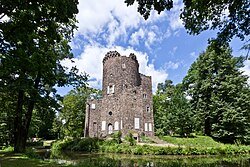
Ruined” castle built by Prince Charles of Hesse-Kassel in the park at Wilhelmsbad, venue for the last convent of the Strict Observance